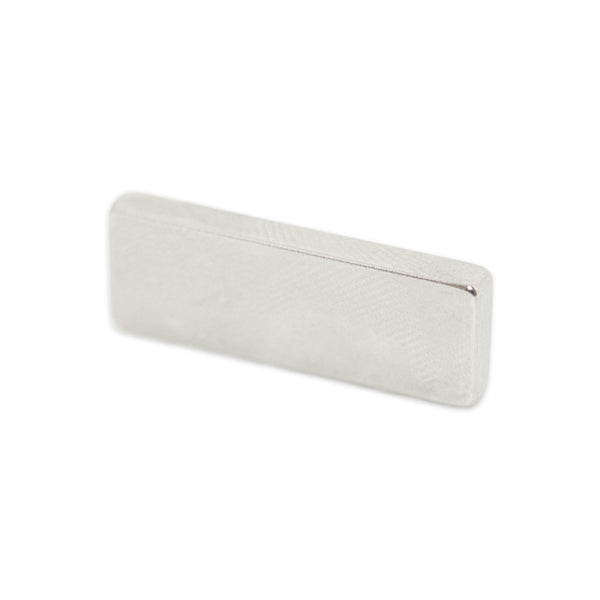
Neodymium Block Magnet - 25mm x 10mm x 3mm
Neodymium Block Magnet - 25mm x 10mm x 3mm
Available in stock
Neodymium Block Magnet – 25mm x 10mm x 3mm
The Neodymium Block Magnet – 25mm x 10mm x 3mm is a slim, rectangular rare earth permanent magnet measuring 25mm long x 10mm wide x 3mm thick. Manufactured from Neodymium Iron Boron (NdFeB), this compact block magnet provides high magnetic performance relative to its size and is suitable for industrial, engineering, manufacturing, holding, positioning, closures, displays, craft and OEM applications.
Also known as a rare earth block magnet, rectangular neodymium magnet, NdFeB block magnet or neodymium bar magnet, its low-profile 3mm thickness makes it particularly useful for integration into shallow recesses, product housings, furniture, signage, fixtures and custom magnetic assemblies where installation space is limited.
As a permanent magnet, this 25mm x 10mm x 3mm neodymium block requires no electricity, batteries or charging to maintain its magnetic field.
Key Features
- 25mm length x 10mm width x 3mm thickness
- Neodymium Iron Boron (NdFeB)
- High-performance rare earth permanent magnet
- Slim rectangular block shape
- Low-profile 3mm thickness
- Strong magnetic performance relative to physical size
- Suitable for holding and positioning
- Useful for magnetic closures and fixtures
- Suitable for shallow recesses and compact assemblies
- Can be bonded into compatible housings
- Permanent magnetic operation
- No electricity or batteries required
- Suitable for industrial, custom and OEM applications
Common Applications
- Industrial equipment
- Engineering assemblies
- Magnetic holding and positioning
- Product manufacturing
- Magnetic closures
- Furniture and cabinetry
- Displays and signage
- Fixtures and jigs
- Prototypes
- Craft and DIY projects
- Research and development
- Custom magnetic assemblies
- OEM products
Slim 25mm x 10mm x 3mm Block Magnet
This neodymium magnet measures 25mm long x 10mm wide x 3mm thick, creating a slim rectangular profile that can be incorporated into applications where available depth is restricted.
The low-profile shape can be useful for:
- Shallow rectangular recesses
- Product housings
- Furniture components
- Cabinetry
- Displays
- Signage
- Mechanical fixtures
- Closures
- Custom manufactured components
The 25mm x 10mm x 3mm dimensions describe the physical size of the magnet and should not be interpreted as a pull-force or load-capacity rating.
Neodymium Iron Boron Rare Earth Magnet
Neodymium Iron Boron (NdFeB) is one of the strongest commercially available permanent magnetic materials.
Its high magnetic performance relative to magnet volume makes neodymium particularly useful where magnetic functionality needs to be incorporated into a relatively compact space.
Neodymium block magnets are commonly used in:
- Industrial machinery
- Magnetic fixtures
- Product assemblies
- Furniture
- Displays
- Closures
- Engineering systems
- Prototype equipment
- OEM components
The specific NdFeB magnetic grade of this magnet has not been supplied and should not be assumed.
Low-Profile Magnet for Holding and Positioning
At only 3mm thick, this rectangular neodymium magnet can be useful for applications where a thicker magnetic component would be difficult to accommodate.
Potential uses include:
- Magnetic catches
- Removable panels
- Cabinet closures
- Display fixtures
- Product enclosures
- Locating components
- Assembly jigs
- Furniture components
- Custom magnetic connections
The suitability of the magnet depends on the required magnetic performance and design of the complete assembly.
Magnetisation Direction
The magnetisation direction of this 25mm x 10mm x 3mm block magnet has not been supplied.
Block magnets can be manufactured with different pole orientations. The magnetisation direction determines which surfaces act as the primary north and south pole faces and can significantly affect performance within a magnetic assembly.
Where pole orientation is important for sensors, magnetic coupling or interaction with other magnets, magnetisation direction should be confirmed before installation.
Magnetic Holding Performance
Actual magnetic performance depends on multiple factors, including:
- NdFeB magnetic grade
- Magnetisation direction
- Target steel thickness
- Target steel composition
- Available contact area
- Surface flatness
- Air gaps
- Paint and coatings
- Adhesive layers
- Magnet orientation
- Load direction
- Magnetic circuit design
No specific pull force or Gauss rating has been supplied for this product and these values should not be inferred solely from the 25mm x 10mm x 3mm dimensions.
Direct Pull vs Shear Force
Magnetic holding performance varies according to the direction in which the load is applied.
Direct pull occurs when force attempts to separate the magnet perpendicular to the target steel surface.
Shear force occurs when the load acts parallel to the target and encourages the magnet to slide.
Practical vertical or sideways holding capacity can therefore be considerably lower than ideal direct-pull performance.
This distinction is particularly important when designing magnetic mounting, furniture, signage and closure applications.
Magnetic Attraction Decreases with Distance
Magnetic attraction decreases rapidly as the distance between the magnet and its target increases.
Layers that can create an air gap include:
- Paint
- Adhesive
- Plastic
- Paper
- Fabric
- Protective coatings
- Dirt
- Surface irregularities
For strongest practical attraction, maximise close contact with clean, flat and sufficiently thick ferromagnetic steel.
Bonding Neodymium Block Magnets
The broad, flat surfaces and slim profile of this block magnet can make it suitable for bonding into compatible products, housings and recesses.
Potential bonded applications include:
- Furniture
- Cabinetry
- Magnetic closures
- Displays
- Signage
- Product housings
- Fixtures
- Prototypes
Before bonding:
- Clean the magnet and substrate
- Select an adhesive compatible with both surfaces
- Follow the adhesive manufacturer's preparation and curing instructions
- Avoid curing temperatures beyond the magnet's permitted operating conditions
- Allow the adhesive to cure fully before loading the assembly
Avoid force-fitting the magnet into an undersized recess because neodymium magnetic material is brittle.
Compatible Target Materials
Neodymium magnets attract ferromagnetic iron and compatible steels.
Suitable target materials may include:
- Mild steel
- Iron
- Magnetic steel sheet
- Ferromagnetic brackets
- Compatible steel machinery components
They will not effectively attract:
- Aluminium
- Copper
- Brass
- Plastic
- Timber
- Glass
Many stainless steel grades may also provide weak or negligible magnetic attraction and should be tested before use.
Neodymium vs Ferrite Block Magnets
Both neodymium and ferrite are permanent magnetic materials, but they provide different performance characteristics.
Neodymium magnets generally provide:
- Much higher magnetic strength relative to size
- Compact dimensions
- Strong magnetic performance in space-restricted applications
- Suitability for precision and engineered magnetic assemblies
Ferrite magnets are generally:
- More economical
- Naturally corrosion resistant
- Lower in magnetic strength relative to size
- Suitable for many general-purpose applications
Neodymium is typically selected where higher magnetic performance is required from a smaller magnetic component.
Permanent Magnetic Operation
This NdFeB block is a permanent magnet and requires no external power source to maintain its magnetic field.
It requires:
- No electricity
- No batteries
- No charging
- No electrical wiring
Its magnetic field remains continuously active during normal use.
Technical Specifications
- Product Type: Neodymium Block Magnet
- Alternative Names: Rare Earth Block Magnet, NdFeB Block Magnet, Rectangular Neodymium Magnet, Neodymium Bar Magnet
- Length: 25mm
- Width: 10mm
- Thickness: 3mm
- Shape: Block / Rectangular
- Magnetic Material: Neodymium Iron Boron (NdFeB)
- Magnet Type: Rare Earth Permanent Magnet
- Magnetic Operation: Permanent
- Power Required: None
- Target Material: Compatible ferromagnetic iron and steel
- Primary Functions: Magnetic holding, positioning and integration into magnetic assemblies
- Typical Applications: Industrial equipment, manufacturing, fixtures, closures, displays, furniture and OEM products
Industrial, Manufacturing and OEM Applications
The combination of a 25mm x 10mm footprint and low-profile 3mm thickness makes this neodymium block magnet suitable for incorporation into a wide variety of manufactured products and engineered assemblies.
Potential users include:
- Engineers
- Product designers
- Equipment manufacturers
- Furniture manufacturers
- Display and signage manufacturers
- Fabricators
- Prototype developers
- OEM manufacturers
For technical applications, magnetic performance should be assessed as part of the complete magnetic circuit and mechanical assembly.
Handling Thin Neodymium Block Magnets
Neodymium magnets can generate strong attraction and should be handled carefully.
NdFeB magnetic material is hard and brittle and can chip, crack or fracture if magnets:
- Snap forcefully together
- Strike steel surfaces
- Are dropped
- Experience excessive mechanical stress
- Are subjected to bending or leverage
The 3mm thickness means particular care should be taken to avoid flexing, bending or levering the magnet during installation and separation.
Do not drill, cut or machine neodymium magnets using conventional methods.
Please Note
This product is a Neodymium Block Magnet measuring 25mm long x 10mm wide x 3mm thick.
No specific NdFeB magnetic grade, coating or plating, pull force, Gauss rating, magnetisation direction, dimensional tolerance or maximum operating temperature has been supplied and these specifications should not be assumed.
Actual magnetic performance depends on magnetic grade, magnetisation direction, target steel thickness and composition, available contact area, air gaps, surface condition, magnet orientation and load direction.
Neodymium Iron Boron is a hard and brittle magnetic material. Avoid drilling, cutting, machining, impact, bending and uncontrolled collisions between magnets.
Strong neodymium magnets can create pinch hazards. Keep magnets away from children, pacemakers and other medical implants, magnetic storage media and sensitive electronic equipment.
Pull Force Information
Pull Force Information
Pull force refers to the maximum holding strength of a magnet. Measured in kilograms, it represents the amount of weight a magnet can support when attached to 10mm thick mild steel, with full, flat, and direct surface-to-surface contact.
A magnet's pull force can be affected by several factors, including its orientation (horizontal vs. vertical) and the presence of any air gaps between the magnet and the surface it’s attached to.
Your payment information is processed securely. We do not store credit card details nor have access to your credit card information.