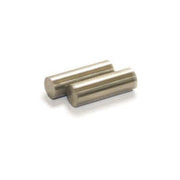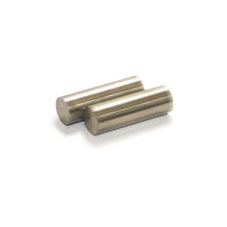
Alnico Rod Magnet - 5mm x 20mm
Alnico Rod Magnet - 5mm x 20mm
Available in stock
Alnico Rod Magnet – 5mm x 20mm
The Alnico Rod Magnet – 5mm x 20mm is a compact cylindrical permanent magnet measuring 5mm in diameter x 20mm long. Manufactured from Alnico magnetic material, primarily composed of aluminium (Al), nickel (Ni) and cobalt (Co), this slender rod magnet is suitable for engineering, manufacturing, sensors, instrumentation, educational demonstrations, laboratory equipment, research, prototypes and custom OEM magnetic assemblies.
Alnico magnets are valued for their excellent magnetic stability, good temperature stability and elevated-temperature capability, together with good corrosion resistance in many environments. The compact 5mm diameter and 20mm length make this rod-shaped magnet suitable for integration into cylindrical housings, mechanical assemblies and applications where a narrow permanent magnetic component is required.
Also known as an Alnico cylinder magnet, Alnico bar magnet, cylindrical Alnico magnet, permanent rod magnet or Alnico permanent magnet, this magnetic component operates continuously without electricity, batteries or charging.
Key Features
- Diameter: 5mm
- Length: 20mm
- Shape: Rod / Cylinder
- Alnico permanent magnetic material
- Primarily composed of aluminium, nickel and cobalt
- Compact 5mm diameter
- Slender 20mm length
- Excellent magnetic stability
- Good temperature stability
- Suitable for elevated-temperature applications where operating conditions have been verified
- Good corrosion resistance in many environments
- Suitable for sensors and instrumentation
- Suitable for engineering and manufacturing
- Useful for educational and laboratory applications
- Permanent magnetic operation
- No electricity, batteries or charging required
- Suitable for prototypes and custom OEM assemblies
Common Applications
- Engineering
- Manufacturing
- Sensors
- Instrumentation
- Position detection
- Magnetic switching
- Mechanical assemblies
- Industrial equipment
- Laboratory equipment
- Scientific experiments
- Research and development
- Educational demonstrations
- School science projects
- Models
- Prototype equipment
- Custom magnetic assemblies
- OEM products
5mm Diameter x 20mm Long Alnico Rod Magnet
This Alnico magnet measures 5mm in diameter x 20mm long, creating a narrow cylindrical profile with a length four times its diameter.
This geometry can be useful for integration into:
- Cylindrical recesses
- Tubular housings
- Sensor assemblies
- Instrumentation
- Mechanical components
- Experimental equipment
- Models
- Prototype devices
- Custom manufactured products
Where the magnet is installed into a recess or housing, provide appropriate dimensional clearance and avoid force-fitting the magnetic material.
What Is an Alnico Magnet?
Alnico refers to a family of permanent magnetic alloys primarily containing:
- Aluminium (Al)
- Nickel (Ni)
- Cobalt (Co)
Other elements may be incorporated depending on the particular Alnico composition and manufacturing process.
Alnico permanent magnets are widely recognised for:
- Excellent magnetic stability
- Good temperature stability
- Elevated-temperature capability
- Good corrosion resistance in many environments
- Reliable permanent magnetic operation
- Long-established use in engineering and instrumentation
The specific Alnico grade and complete alloy composition have not been supplied for this magnet and should not be assumed.
Sensors and Instrumentation
The compact cylindrical shape can make Alnico rod magnets useful for appropriately designed sensors and instrumentation.
Potential applications include:
- Position sensing
- Proximity detection
- Magnetic switching
- Mechanical indicators
- Instrumentation
- Measurement equipment
- Automation systems
- Experimental apparatus
Magnetic sensor performance depends on factors including field strength, magnetisation direction, pole orientation, sensor type, distance and surrounding materials.
The magnetisation direction and pole orientation have not been supplied for this magnet and should be confirmed where field direction is critical.
Industrial and Engineering Applications
Alnico rod magnets have a long history of use in industrial and engineering applications where permanent magnetic operation and magnetic stability are important.
Potential applications include:
- Machinery
- Manufacturing equipment
- Mechanical assemblies
- Positioning systems
- Instrumentation
- Test equipment
- Inspection equipment
- Custom engineered products
The narrow 5mm diameter can be useful where available installation space is limited.
Laboratory and Research Applications
The simple cylindrical geometry also makes this Alnico magnet suitable for laboratory, research and prototype applications.
Potential uses include:
- Magnetic field experiments
- Prototype sensors
- Magnetic circuit development
- Research equipment
- Scientific apparatus
- Product development
- Proof-of-concept assemblies
Where quantitative magnetic performance is important, the specific magnetic grade, magnetisation and field characteristics should be confirmed before use.
Educational and Science Applications
Alnico rod magnets can also be useful for demonstrating fundamental magnetic principles.
Potential educational activities include:
- Magnetic attraction and repulsion
- North and south magnetic poles
- Magnetic field demonstrations
- Ferromagnetic material testing
- Magnet-to-magnet interaction
- Magnetic field mapping
- Sensor demonstrations
- Basic physics experiments
The shape of the magnet should not be used to infer the location of its magnetic poles.
Magnetisation Direction
Rod and cylinder magnets can be manufactured with different magnetisation configurations.
The magnetisation direction for this product has not been supplied.
Do not automatically assume that the two 5mm diameter end faces correspond to the north and south poles without verification.
For sensor systems, magnet-to-magnet assemblies, experiments or engineered magnetic circuits, confirm the required pole orientation before installation.
Temperature Stability
One of the important characteristics of Alnico magnetic material is its good temperature stability and suitability for elevated-temperature applications compared with many other permanent magnet materials.
This can make Alnico useful in appropriately engineered:
- Industrial machinery
- Instrumentation
- Manufacturing equipment
- Laboratory equipment
- Sensors
- Specialised mechanical systems
However, the maximum operating temperature for this specific magnet has not been supplied.
For temperature-critical applications, confirm the exact Alnico grade and operating-temperature specification before installation.
Magnetic Performance
Actual magnetic performance depends on factors including:
- Alnico grade
- Magnetisation direction
- Pole orientation
- Magnet geometry
- Magnetic circuit design
- Target steel composition
- Target steel thickness
- Air gaps
- Available contact area
- Surrounding magnetic materials
No specific pull force or magnetic flux density in Gauss has been supplied for this product and these values should not be inferred from its 5mm x 20mm dimensions.
Air Gaps and Distance
Magnetic field strength and attraction generally decrease as distance from the magnet increases.
Performance can be influenced by separation created by:
- Mechanical clearance
- Plastic housings
- Paint
- Protective coatings
- Adhesive
- Non-magnetic covers
- Air gaps
This is particularly important in sensors and instrumentation, where relatively small changes in distance can affect the magnetic field reaching the sensing component.
Compatible Target Materials
Alnico magnets attract suitable ferromagnetic materials, including:
- Mild steel
- Iron
- Magnetic steel
- Compatible ferromagnetic components
They do not effectively attract non-magnetic materials such as:
- Aluminium
- Copper
- Brass
- Plastic
- Timber
- Glass
Many stainless steel grades may be weakly magnetic or non-magnetic and should be tested before relying on magnetic attraction.
Alnico vs Neodymium Magnets
Alnico and neodymium are both permanent magnetic materials but offer different characteristics.
Alnico magnets are particularly valued for:
- Excellent magnetic stability
- Good temperature stability
- Elevated-temperature capability
- Good corrosion resistance in many environments
- Established use in instrumentation and engineering
Neodymium magnets generally provide:
- Higher magnetic performance relative to physical size
- Greater magnetic strength from compact dimensions
- Advantages where maximum magnetic performance within limited space is required
Alnico may be preferred where temperature performance and magnetic stability are greater priorities than maximising magnetic strength relative to magnet volume.
Alnico vs Ferrite Magnets
Ferrite and Alnico are both established permanent magnetic materials.
Ferrite magnets are generally:
- Economical
- Naturally corrosion resistant
- Widely used for general-purpose magnetic applications
Alnico magnets can offer advantages where:
- Temperature stability is important
- Elevated-temperature capability is required
- Magnetic stability is a priority
- The application involves sensors, instrumentation or specialised engineering
The appropriate material depends on the complete magnetic, environmental and mechanical requirements of the application.
Permanent Magnetic Operation
This Alnico rod magnet is a permanent magnet.
It requires:
- No electricity
- No batteries
- No charging
- No external power supply
Its magnetic field remains continuously active during normal use.
Technical Specifications
- Product Type: Alnico Rod Magnet
- Alternative Names: Alnico Cylinder Magnet, Alnico Bar Magnet, Cylindrical Alnico Magnet, Permanent Rod Magnet
- Diameter: 5mm
- Length: 20mm
- Shape: Rod / Cylinder
- Magnetic Material: Alnico
- Principal Alloy Elements: Aluminium, Nickel and Cobalt
- Magnet Type: Permanent Magnet
- Magnetic Operation: Permanent
- Power Required: None
- Target Materials: Compatible ferromagnetic iron and steel
- Primary Functions: Magnetic attraction and integration into magnetic assemblies
- Typical Applications: Engineering, manufacturing, sensors, instrumentation, laboratory equipment, education, research, prototypes and OEM products
Handling Alnico Rod Magnets
Alnico is a hard magnetic material and should be handled carefully.
The relatively slender 5mm x 20mm rod geometry should be protected from unnecessary impact, bending and side loads.
Avoid:
- Dropping the magnet onto hard surfaces
- Allowing magnets to collide forcefully
- Striking the magnet
- Applying excessive bending force
- Force-fitting it into an undersized recess
- Drilling, cutting or machining the magnet unless specifically engineered for modification
Provide suitable mechanical support when integrating the magnet into an assembly.
Safety Information
Due to its small size, this magnet should be kept securely away from babies and children.
Permanent magnets should also be kept an appropriate distance from:
- Pacemakers
- Implanted medical devices
- Magnetic storage media
- Magnetic cards
- Sensitive electronic equipment
Where unexpected magnetic release could create an injury or equipment hazard, use appropriate mechanical retention rather than relying solely on magnetic attraction.
Please Note
This product is an Alnico Rod Magnet measuring 5mm in diameter x 20mm long.
No specific Alnico grade, complete alloy composition, pull force, Gauss rating, magnetisation direction, pole orientation, coating or finish, dimensional tolerance or maximum operating temperature has been supplied and these specifications should not be assumed.
Actual magnetic performance depends on the Alnico grade, magnetisation, magnetic circuit, target material, air gaps, installation geometry and operating conditions.
For sensor, temperature-critical or engineered applications, confirm the required magnetic and environmental specifications before installation.
This magnet is not certified lifting equipment and should not be used for overhead or safety-critical lifting.
Pull Force Information
Pull Force Information
Pull force refers to the maximum holding strength of a magnet. Measured in kilograms, it represents the amount of weight a magnet can support when attached to 10mm thick mild steel, with full, flat, and direct surface-to-surface contact.
A magnet's pull force can be affected by several factors, including its orientation (horizontal vs. vertical) and the presence of any air gaps between the magnet and the surface it’s attached to.
Your payment information is processed securely. We do not store credit card details nor have access to your credit card information.